
A December Proposal: The Ring Timeline, Week by Week

Many people plan a proposal for Christmas Eve or New Year's Eve. If you are planning one of them, the ring sets your timeline. A ring in stock in your partner's size can be ready in days. A ring made to order, or one that needs resizing, takes weeks.
This guide works backward from December 24 and December 31. It tells you what to decide each week, starting in mid-November, so the ring is in your pocket on the night.
Six weeks out: set the budget and the style
Start with two decisions: how much you want to spend, and what your partner already wears. Look at their jewellery for a week. Do they wear yellow, white or rose gold? Small, flat pieces, or bold ones? Do they work with their hands?
Those answers point to a shape and a setting. A person who works with their hands, lifts weights or does a lot of washing up needs a setting that sits low and protects the stone. Our guide to engagement ring settings shows the main options. Our engagement ring timeline page covers the full process for any month of the year.


Five weeks out: find the ring size
The size is the part most people get wrong, because asking spoils the surprise. Three ways to find it quietly:
- Borrow a ring your partner wears on the ring finger of the left hand, and have a jeweller measure it. Bring it back the same day.
- Press that ring into a bar of soap or trace the inside on paper, and bring the print to us.
- Ask a close friend or family member who can find out in conversation.
A ring worn on another finger is a different size, so tell the jeweller which finger it came from. Our post on measuring ring size at home explains each method. If you are unsure between two sizes, choose the larger one: it is easier to make a ring smaller than larger.
Four weeks out: choose the diamond
Two choices shape the price: the size of the stone and whether it is natural or lab-grown. GIA notes that 1.00, 1.50 and 2.00 carats are "magic sizes" and that the price difference between a 0.99 ct and a 1.00 ct stone can be significant, even though they are hard to tell apart by eye. A stone just under a round number can save you money.
GIA says lab-grown diamonds have essentially the same chemical makeup, crystal structure and physical properties as natural ones. A lab-grown stone gives you a larger diamond for the same budget. A natural stone is rarer. Our lab-grown and natural guide goes through the trade-offs.


Pick a setting that protects the stone
GIA says diamond is the hardest gem but not the toughest, and that a hard blow can chip or break it. Pear and marquise diamonds have exposed points, which are the most likely parts to chip. GIA says points and corners are better protected with bezels, partial bezels or V-shaped prongs.
So if you choose a pear or marquise shape, ask for a V-prong on each point. If your partner is hard on their hands, a bezel, a rim of metal around the whole stone, is the safest choice. Our post on bezel and prong settings compares them.


Three weeks out: order a custom ring at the latest
A ring from stock can ship quickly. Our FAQ page says online orders go to the courier within 5 working days at the latest. A personalized or custom-made piece takes longer: up to 15 working days before it goes to the courier.
Count working days backward and the dates are tight. 15 working days before Christmas Eve, Thursday, December 24, is Thursday, December 3. Add time for shipping, and a custom ring for Christmas Eve should be ordered by the end of November. For New Year's Eve, aim for the first week of December.
Remember that personalized pieces, such as a ring made in a special size or engraved, cannot be returned or exchanged. Settle every detail before you order. Our custom engagement rings page explains how a design is made.
Two weeks out: check, insure and hide it
When the ring arrives, check it against the receipt: metal and karat, stone type, carat weight and size. Look at the stone under good light and make sure every prong is tight.
Then insure it. A ring that leaves the house in a coat pocket is at risk before it is ever on a finger. Your insurer may ask for an appraisal or a detailed receipt before it covers a ring for its full value. Our post on jewellery insurance in Canada explains what to ask your insurer.
Keep the box out of sight. A ring box makes a clear square shape in a jacket pocket, so plan where it will sit on the night.


After the yes: sizing and the wedding band
If the ring does not fit, do not let your partner wear it loose. A loose ring can slide off without anyone noticing. Bring it in for sizing. Plain shanks can usually be changed by one or two sizes. Rings with stones all the way around are harder, which is why the size check five weeks out matters.
Some couples choose the wedding band at the same time, so the two rings sit flush. Our post on matching a wedding band to an engagement ring explains what to look for.


Main points
- Start six weeks before the date with the budget and your partner's style.
- Find the ring size five weeks out. If unsure, choose the larger size.
- GIA notes that a stone just under 1.00, 1.50 or 2.00 carats can cost noticeably less.
- Protect pear and marquise points with V-prongs, or choose a bezel.
- A custom ring for Christmas Eve should be ordered by the end of November.
- Insure the ring before the night.
Questions we get asked


How far ahead should I buy an engagement ring for a Christmas proposal?
Start about six weeks before, which means mid-November for Christmas Eve. That gives you time to set a budget, find the ring size quietly, choose the stone and the setting, and still order a custom ring if you want one. A ring that is in stock in the right size can be ready much faster. Our FAQ page says online orders go to the courier within 5 working days at the latest. A custom or personalized ring takes up to 15 working days before it is shipped, so it needs to be ordered by the end of November for Christmas Eve. Leave room for a sizing change or a delivery delay. December is a busy month for couriers, so the last two weeks before Christmas are the wrong time to start. If you are already late, choose a ring from stock in a size you are sure of.
How can I find out the ring size without asking?
The best way is to borrow a ring your partner already wears on the ring finger of the left hand and have a jeweller measure it with a ring mandrel, which takes a minute. Return it the same day so it is not missed. If you cannot take it out of the house, press it into a bar of soap or a piece of modelling clay to make a print of the inside, or trace the inside edge on paper with a sharp pencil. A friend or family member may also be able to find out in conversation, for example by trying on rings together. Rings from other fingers are a different size, so note where the ring was worn. If you are between two sizes, choose the larger one, because making a ring smaller is easier than making it larger.
Is a lab-grown diamond a good choice for an engagement ring?
It can be. GIA says lab-grown diamonds have essentially the same chemical makeup, crystal structure and physical properties as natural diamonds. They are as hard, they sparkle the same way, and they need the same care. The main reason people choose them is size for the money: the same budget buys a larger lab-grown stone than a natural one. The main reason people choose natural is rarity. Think about what matters to your partner. Some people care about the origin of the stone, and some only care about the look. If you do not know, ask a close friend, or choose a setting that could later hold a different stone. Whatever you pick, get the type of diamond written on the receipt.
What setting is best for someone who works with their hands?
A bezel setting is the safest choice. A bezel is a rim of metal that wraps around the whole stone, so the edge of the diamond never takes a direct knock. GIA says points and corners are better protected with bezels, partial bezels or V-shaped prongs, and it notes that diamond, though the hardest gem, can chip from a hard blow. A low setting also helps, because a stone that sits close to the finger catches less on gloves, sleeves and tools. Four or six prongs are fine for many people, but prongs can bend over years of daily work, so they need checking. For nurses, trades workers, gardeners and people who lift weights, we suggest a bezel or a low six-prong head. Whatever the setting, the ring should come off for heavy work and for the gym.
Can I propose with a ring and change it later?
Yes, and many people do. Some propose with a simple ring or a placeholder, then choose the final ring together. Others propose with the real ring and adjust the size or add a wedding band afterward. If you want to keep the option to change the design, ask about it before you buy. A stock ring bought online can be returned or exchanged within 30 days, according to our FAQ page, as long as it has not been made personal. A custom ring, a ring made in a special size, or an engraved ring cannot be returned or exchanged. So if you are unsure about the style, propose with a stock ring and keep the box and receipt. Once your partner has said yes and tried it on, you can decide together whether to keep, size or exchange it.
How much does a custom engagement ring take to make?
At Vanhess, our FAQ page says personalized and custom-made pieces are handed to the courier within 15 working days at the latest. That clock starts once every detail is agreed: the stone, the metal, the size and the design. Before that, you need time to choose the stone and approve the design, which can take a week or more on its own. So plan for four to five weeks in total from your first visit to the ring in your hand. For a Christmas Eve proposal, that means starting in the middle of November. Custom rings cannot be returned or exchanged, so check the drawing, the stone and the size carefully before you approve it. If time is short, a stock ring from our engagement ring collection is the safer route.
Should I insure the ring before I propose?
Yes. The ring is most at risk in the days around the proposal: in a coat pocket, in a car, in a restaurant, or on a hike. Call your insurer before the night and ask whether your home policy covers jewellery, what the limit is for a single item, and what proof they need. Your insurer may ask for an appraisal or a detailed receipt that lists the metal, the karat, the stone type and the carat weight. Some offer a separate jewellery rider with wider cover, for example for loss as well as theft. Take clear photos of the ring and keep the receipt somewhere safe. Our posts on jewellery insurance in Canada and on photographing jewellery for insurance explain each step. Once you are engaged, add your partner's name to the cover if the policy needs it.
What if the ring does not fit after the proposal?
Do not let your partner wear it if it is loose. A loose ring can slip off without anyone noticing. Wear it on a chain or keep it in the box until it is sized. Rings with a plain band can usually be made one or two sizes larger or smaller. Rings with stones all the way around the band, or with a twisted or patterned band, are harder to resize and sometimes cannot be resized at all. If the ring is too tight, do not force it over the knuckle. Bring it in and we will measure the finger properly and tell you what can be done. Our post on whether a ring can be resized explains the limits. December is busy, so book the sizing early in January if you can wait.
Sources
- GIA: Diamond carat weight
- GIA: What Are Lab-Grown Diamonds?
- GIA: More Than the Mohs Scale, gem durability
- GIA: Diamond colour
Checked November 12, 2026. If something here is out of date, tell us and we will fix it.
Visit Vanhess in Coquitlam
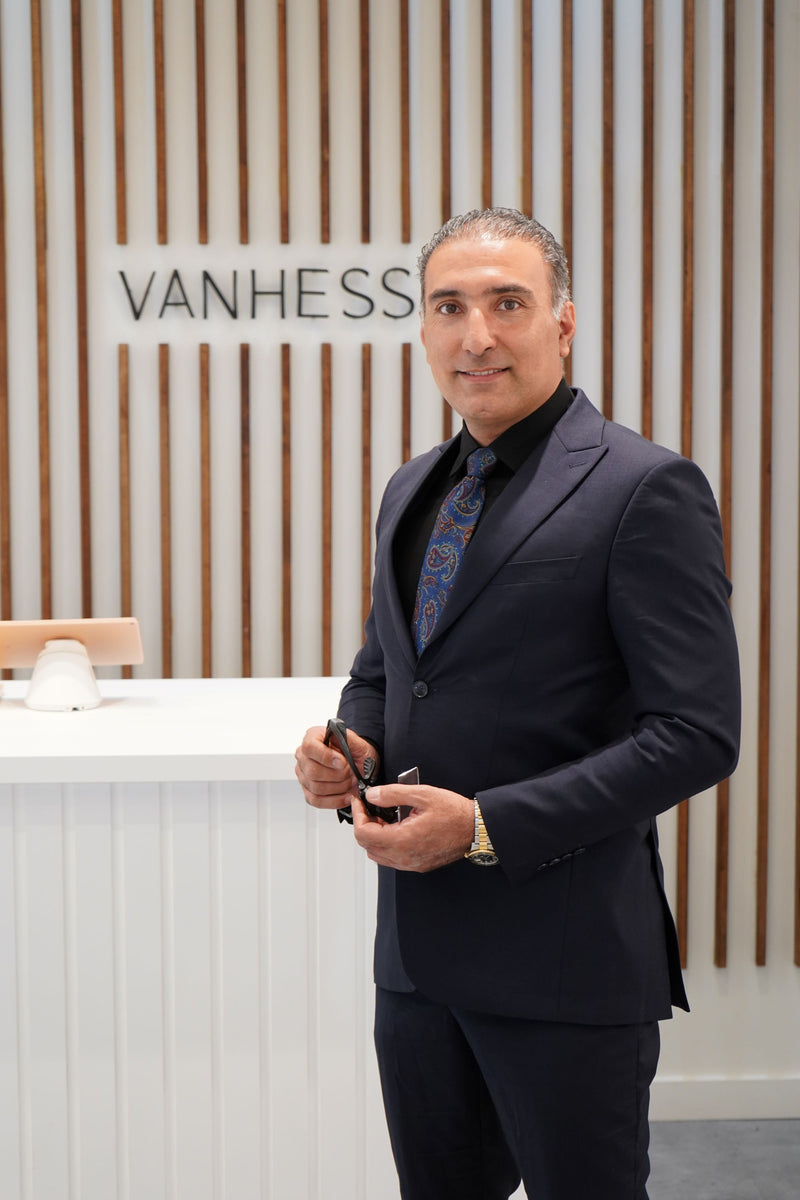
Mehran and the team at Vanhess can help you plan the ring. Come to 2929 Barnet Highway, Unit 2424, in Coquitlam Centre, or call +1 (604) 653-6449 to book a time. Bring a borrowed ring if you have one, and we will measure it. You can also browse engagement rings online first.
