
Diamond Hoop Earrings: Inside-Out, Pave and Huggie Styles

A diamond hoop gives more sparkle than a stud of the same budget, because the diamonds run along the curve and catch light from many angles. Hoops also move as you turn your head, which a stud never does.
This guide covers the main styles, how big to go, what the carat weight on the tag means, and the parts to check before you buy.
Inside-out hoops
An inside-out hoop has diamonds set along the outside of the hoop and along the inside. From the front you see the diamonds on the inside curve, and from the side you see the outer row. The result is a hoop that sparkles from every angle.
Our Inside-Out Diamond Hoop Earrings in the Olha New Collection are 18K white gold with natural diamonds. The Lab-Grown Diamond Hoop Earrings use the same idea in 10K white gold with lab-grown diamonds. GIA says lab-grown diamonds have essentially the same chemical makeup and physical properties as natural diamonds.


Pave and tennis hoops
Pave hoops cover the front of the hoop with small diamonds set close together. GIA describes pave as many small gems set close together in an interlocking honeycomb pattern, and says the small diamonds used, called melee, weigh less than 1/5 carat each.
A tennis hoop sets one row of evenly sized diamonds, each in its own small setting, like a tennis bracelet bent into a circle. Our Tennis Hoop Earrings come in round and oval shapes, in small, medium, large and extra large sizes.


Half hoops
A half hoop is an open C shape that goes through the ear on a post, with a butterfly back behind. It looks like a hoop from the front and is as secure as a stud. Half hoops sit closer to the face and do not swing.
Our Double Row Diamond Half Hoop Earrings set two rows of lab-grown diamonds in 10K yellow gold. For someone who wants the look of a hoop but finds full hoops catch on scarves and hair, a half hoop is the easy answer.


Huggies
Huggies are small hoops that sit close to the ear lobe, almost hugging it. They are the easiest hoops to wear every day and to sleep in, because they have little to catch. Diamond huggies often have pave diamonds on the front half only.
Huggies also suit a second or third hole, where a stud can look lost. Our post on huggie hoops and hoop earrings compares sizes, and the guide to planning an ear stack shows how to mix them.


How big to go
Hoop size is the inside width of the hoop. Small hoops and huggies sit at the lobe. Medium hoops hang to around the jawline. Large hoops are a statement and suit evenings more than daily wear.
For a first pair of diamond hoops, we suggest a small or medium size. It is the easiest to wear with everything, and the diamonds sit where people see them when they talk to you. If you already wear plain gold hoops, choose a diamond hoop the same size so it feels familiar.


Carat weight and the clasp
The carat weight on a hoop is a total for both earrings. GIA defines a carat as 200 milligrams. Because the diamonds are small, a hoop with 1 carat in total holds many stones, each far smaller than a 1 carat solitaire, which is why hoops cost less than studs of the same total weight. Our post on total carat weight explains how to read it.
Then check the clasp. Most diamond hoops close with a hinged snap or a latch that clicks. It should click firmly and stay shut when you tug it gently. A clasp that opens on its own can lose you a hoop without you noticing.

Main points


- Inside-out hoops have diamonds on the inner and outer curve, so they sparkle from the front and side.
- Pave hoops cover the front with small diamonds. Tennis hoops use one row of matched stones.
- Half hoops look like hoops but fasten like studs. Huggies sit close to the lobe and suit daily wear.
- The carat weight on hoops is a total for both earrings.
- Check that the clasp clicks firmly shut.
Questions we get asked
What are inside-out diamond hoops?
Inside-out hoops are hoops with diamonds set along both the inside and the outside of the curve. When you look at someone wearing them, you see the diamonds on the inside of the hoop facing you, and from the side you see the outer row, so the earring sparkles from almost every angle. Regular diamond hoops usually have stones on the front or outside only. Inside-out hoops take more diamonds and more setting work, so they cost more than a single-row hoop of the same size. They suit someone who wants a hoop that looks bright in photos and across a room. Our Inside-Out Diamond Hoop Earrings are 18K white gold with natural diamonds, and the Lab-Grown Diamond Hoop Earrings offer a similar look in 10K white gold.
Are diamond hoops good for everyday wear?
Small hoops and huggies are good for daily wear. They sit close to the lobe, so they catch less on hair, scarves and collars. Large hoops are better for evenings, because they swing and can catch. The diamonds themselves are hard, at 10 on the Mohs scale, but the small prongs and the clasp take wear over time. Take hoops off for sport, swimming and sleep, apart from huggies, which sit close enough that you may choose to keep them in. Put them on after hairspray and lotion, which leave a film on the diamonds. Clean them every couple of weeks with warm water, a drop of mild soap and a soft brush. Once a year, have a jeweller check the clasp and the small prongs, since a loose stone in a row is easy to miss until it falls out.
How do I choose the right hoop size?
Start with how you will wear them. For every day, a small hoop or huggie that sits at the lobe is the easiest. For work and evenings, a medium hoop that hangs toward the jawline gives more presence without being heavy. Large hoops are a statement. Look at the width of the hoop as well as the size: a thicker hoop with two rows of diamonds looks bolder than a thin single row of the same size. If you already own plain gold hoops you like, measure their inside width and choose diamond hoops close to that. Hold the earrings up to your ear in a mirror before you buy, and look from the front and the side. The right size is the one you will reach for most often.
What clasp is best on diamond hoops?
A hinged clasp that clicks firmly into a slot is the most common on diamond hoops, and a good one is secure. The post swings on a hinge, goes through the ear, and snaps into the other end of the hoop. Some hoops use a latch back or a lever that folds down. Whichever type, test it: it should click when it closes, and stay shut when you give it a gentle tug. A clasp that opens too easily, or that you have to squeeze hard to open, needs attention. Half hoops use a post and a butterfly back, like a stud, which is the most secure of all. Check the clasp every few months. If it feels loose, bring the hoops to a jeweller to tighten before one is lost.
Natural or lab-grown diamonds in hoops?
Both are good choices. GIA says lab-grown diamonds have essentially the same chemical makeup, crystal structure and physical properties as natural diamonds, so in a hoop they look and wear the same. The main difference is price. Because hoops use many small diamonds, lab-grown hoops can give you a wider, brighter hoop or more total carat weight for the same budget. Natural diamonds suit someone who wants an earth-mined stone or plans to pass the earrings down. In our Olha New Collection, the Inside-Out Diamond Hoop Earrings use natural diamonds, and the Lab-Grown Diamond Hoop Earrings and the Double Row Diamond Half Hoop Earrings use lab-grown diamonds. Each product page says which type the piece uses, so check the details before you buy.
How do I clean diamond hoop earrings?
Soak the hoops for a few minutes in warm water with a drop of mild dish soap. Brush gently with a soft toothbrush along the row of diamonds, especially behind the stones and inside the curve, where lotion and skin oil collect. Rinse in clean warm water with the sink plugged, then dry with a soft cloth. Open the clasp while cleaning so you can reach the hinge, and close it again before you put them away. Avoid household cleaners and toothpaste, which can scratch the gold. If the hoops have coloured stones such as emerald, skip ultrasonic and steam cleaners, as GIA advises for emeralds. For all-diamond hoops, have a jeweller check the small prongs before any ultrasonic clean, because vibration can loosen a stone that is already worn.
Can a lost diamond in a hoop be replaced?
Yes. A jeweller can set a new diamond matched to the size and colour of the others in the row. The small diamonds in hoops are melee, which GIA says are sorted by colour and clarity before they reach jewellery makers, so a close match is usually possible. Stop wearing the earring as soon as you see a gap, because the stones on either side of the gap may also be loose, and the empty setting can catch. Bring both earrings in, so the jeweller can check the whole pair and match the new stone to its neighbours. A gap in a row of diamonds shows as a dark spot, so it is worth fixing quickly. Vanhess products carry a lifetime repair and maintenance guarantee, as our FAQ page explains.
Do diamond hoops make a good gift?
Yes. Hoops need no ring size, and diamond hoops suit a wide range of ages and styles, from a teenager's first pair of small huggies to a large pair for an anniversary. For a gift, a small or medium size is the safest, because it is easy to wear every day. Match the metal to what the person already wears: yellow gold if their other jewellery is yellow, white gold if it is white. If you are unsure, white gold suits both, since white metal makes diamonds look whiter. Keep the receipt and the box. Our FAQ page says online purchases can be returned or exchanged within 30 days. Add a note about cleaning and checking the clasp, and the hoops will last for years.
Sources
- GIA: Melee Diamonds, Tiny Diamonds, Big Impact (April 11, 2017)
- GIA: Diamond carat weight
- GIA: What Are Lab-Grown Diamonds?
- GIA: More Than the Mohs Scale, gem durability
Checked November 12, 2026. If something here is out of date, tell us and we will fix it.
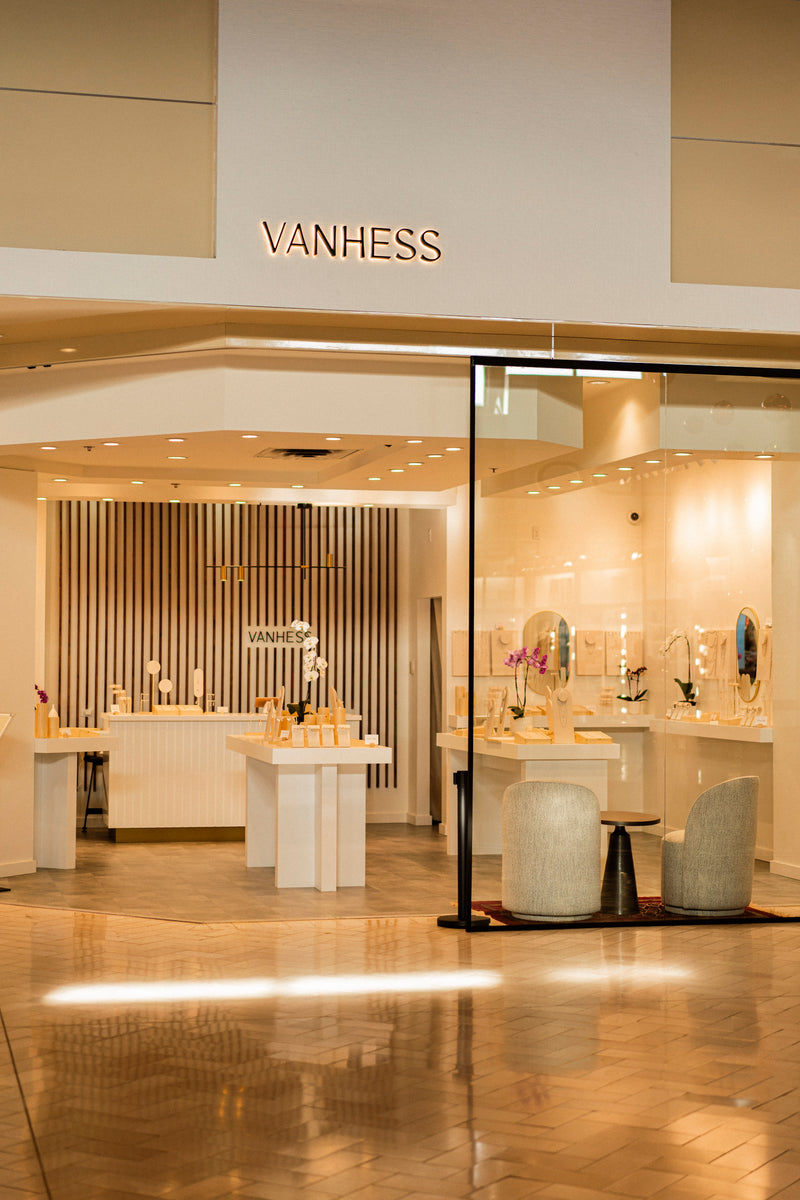
Visit Vanhess in Coquitlam

Try diamond hoops in different sizes at Vanhess, 2929 Barnet Highway, Unit 2424, in Coquitlam Centre, or call +1 (604) 653-6449. Browse our earrings and the Olha New Collection online.
