
Two-Tone Gold Jewellery: White and Yellow Gold in One Piece

Two-tone jewellery uses two colours of gold in one piece, most often yellow and white. Sometimes the split is for looks, like a bracelet with alternating links. Often it has a practical reason: a yellow gold ring with white gold prongs makes a white diamond look whiter.
This guide explains how two-tone pieces are made, when the second colour helps, and how to look after a piece that has both.
How white and yellow gold differ
Both colours start with pure gold. What changes is the metal mixed in. GIA lists copper, silver and zinc for yellow gold, and nickel or palladium, copper and zinc for white gold. Rose gold is gold alloyed with copper and silver.
White gold also gets a coat. GIA says white gold is usually plated with rhodium for a whiter look, a better shine and protection against scratches, and that the rhodium can wear away over time. Both colours carry the same karat stamp. In Canada, the Competition Bureau allows 14K gold to be marked .583 and 18K to be marked .750, whatever the colour.


Why yellow gold rings often have white prongs
A diamond reflects what is around it, including the metal that holds it. GIA says that if you choose a yellow gold or two-tone ring, the prongs that hold the diamond should be a white metal like white gold or platinum. Its reason: yellow gold prongs could give some yellow colour to the diamond, making a colourless or near-colourless stone look like a lower colour grade.
So many yellow gold rings are two-tone by design. The band is yellow, and the head that holds the stone is white. Our two-tone Single Bezel Diamond Ring is built this way: the diamond sits in a white gold bezel on a yellow gold band.

Two-tone for style
Two-tone also works as a design on its own. Bracelets alternate yellow and white links. Earrings twist the two colours together like a rope. GIA describes mixed metal rings with the mounting in one colour and the prongs in another, and double halos with one row in rose gold and the other in white or yellow gold.
Our Cushion Diamond Stud Earrings with Rope Frame put a yellow gold rope frame around a white gold cluster of diamonds. The Oval Diamond Bezel Ring does the opposite, with a yellow gold rim around the oval on a white gold band set with diamonds. The Ruby Flower Stud Earrings and the Emerald Flower Pendant pair white gold with yellow gold claws around the coloured stones.


Two-tone makes mixing metals easy
If you wear a yellow gold watch and a white gold engagement ring, a two-tone piece ties them together. It gives a reason for both colours to be on the same hand or wrist. A two-tone bracelet next to a yellow gold watch and a white gold ring makes the mix look planned.
The same idea works for stacking rings: a two-tone band between a yellow ring and a white ring joins them. Our post on mixing gold and silver and our guide to mixing metals show more combinations.


Caring for two-tone pieces
Clean two-tone gold the same way as any gold: warm water, a drop of mild soap and a soft brush. Take the piece off before swimming in a pool or hot tub.
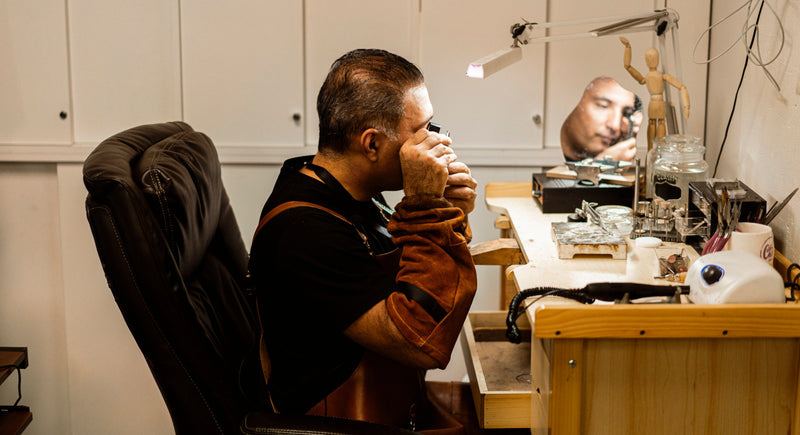
The white part needs one extra step over time. GIA says rhodium plating will wear away gradually, so the white gold needs replating now and then. On a two-tone ring, the jeweller covers the yellow parts while plating the white parts, so the yellow stays yellow. Our post on rhodium plating explains when it is due, and why white gold turns yellow shows the signs.
Allergies and two-tone gold
Two-tone pieces contain the alloys of both colours, so check both if your skin reacts to metal. GIA says to avoid white gold if you are allergic to copper or nickel, a common allergen, and to avoid rose gold if you are allergic to copper. It suggests platinum as an alternative. GIA also says people allergic to nickel should avoid white gold alloyed with nickel.
Ask whether the white gold in a piece is made with nickel or palladium. Our post on hypoallergenic jewellery covers the options.


Main points


- Yellow gold is alloyed with copper, silver and zinc. White gold uses nickel or palladium, copper and zinc, and is usually rhodium plated.
- GIA says the prongs holding a white diamond on a yellow gold ring should be white metal, because yellow prongs can make the stone look more yellow.
- Two-tone pieces make mixing yellow and white jewellery look planned.
- The white parts need rhodium replating over time. The jeweller covers the yellow parts while plating.
- If you have a nickel or copper allergy, ask what is in both colours.
Questions we get asked
What is two-tone gold?
Two-tone gold is jewellery that uses two colours of gold in one piece, usually yellow and white, sometimes rose and white or yellow and rose. Each colour is a separate gold alloy. GIA lists copper, silver and zinc as the metals mixed into yellow gold, and nickel or palladium, copper and zinc for white gold. Rose gold is gold alloyed with copper and silver. The jeweller joins the two alloys during making, either by soldering separate parts together, like a white gold head on a yellow gold band, or by building links or rows in each colour. The karat stays the same across the piece, so a 14K two-tone ring is 14K in both colours. Two-tone is different from plating a yellow ring with white rhodium in places, which wears off. Ask which method was used.
Why do yellow gold engagement rings have white gold prongs?
To keep the diamond looking white. GIA says a diamond acts like a tiny mirror and reflects the colour of the metal around it. It advises that on a yellow gold or two-tone ring, the prongs that hold the diamond should be a white metal like white gold or platinum, because yellow gold prongs could give some yellow colour to the diamond and make a colourless or near-colourless stone look like it has a lower colour grade. That is why so many yellow gold engagement rings have a white gold head. The yellow band gives the warm look people want, and the white prongs let the diamond stay bright. GIA also says that for diamonds graded K or L, either metal works, and a gold band brings out the hint of yellow for a softer look.
Is two-tone gold out of style?
The practical use, white prongs on a yellow ring, is as common as ever, and mixed metal stacking, two-colour link bracelets and rope-twist earrings are all easy to find in shops now. In our view, two-tone looks current when the two colours have a clear job: white around the diamond, yellow for the band, or a planned pattern of links. It looks dated when the colours are split in a random way. The easiest test is to ask whether the piece goes with what you already own. If you wear both yellow and white jewellery, a two-tone piece will join them and you will wear it more, which is the best sign a style will last for you. Try it on with your own pieces before you decide.
How do I clean two-tone gold jewellery?
Clean it the same way as any solid gold. Soak it for a few minutes in warm water with a drop of mild dish soap, then brush gently with a soft toothbrush, paying attention to the back of any stones and to the joins between the two colours, where dirt collects. Rinse in clean warm water with the sink plugged and dry with a soft cloth. Avoid bleach, chlorine and harsh dips, and take the piece off before a pool or hot tub. If the piece holds emeralds or pearls, follow the gentler care for those stones. If the white parts start to look warm or yellow, the rhodium is wearing and the piece needs replating. Bring it in and we will check it.
Can a two-tone ring be rhodium plated?
Yes. GIA says white gold is usually plated with rhodium, and that the plating wears away gradually, so white gold needs replating now and then. On a two-tone ring, the jeweller paints a protective layer over the yellow parts first, then plates only the white parts, then removes the protective layer. That way the yellow gold keeps its colour and the white parts come back bright. It takes more care than plating an all-white ring, so ask your jeweller whether they do two-tone replating before you leave the ring. How often you need it depends on wear. A ring worn every day and used for work with the hands will need it more often than earrings. Our post on rhodium plating explains the signs that it is time.
Is two-tone gold more expensive?
Sometimes, because making a piece in two alloys takes more work at the bench. The jeweller has to make or buy two alloys, shape the parts, and join them cleanly, and a two-tone piece that needs replating takes extra steps each time. The gold itself is priced by karat and weight, not by colour, so a 14K white gold part and a 14K yellow gold part of the same weight hold the same amount of pure gold. When you compare prices, compare karat and gold weight first, then the work in the piece. Our product pages list the karat and the gold weight in grams, so you can compare a two-tone piece with a one-colour piece on equal terms. Ask the store which parts are solid and which are plated, too.
I am allergic to nickel. Can I wear two-tone gold?
Possibly, but check both alloys before you buy. GIA says people allergic to nickel should avoid white gold alloyed with nickel, and it says to avoid white gold if you are allergic to copper or nickel. White gold can be made with palladium instead of nickel, which is the safer choice for nickel allergies. The yellow part is usually made with copper, silver and zinc, so if you react to copper as well, that part could also be a problem. GIA suggests platinum as an alternative for people with these allergies. Ask the jeweller in writing what the white gold is alloyed with. If you are unsure, wear the piece for a short time at first and watch for redness or itching. Our post on hypoallergenic jewellery lists the metal options.
Do two-tone and yellow gold pieces go together?
Yes, and that is one of the main reasons to buy two-tone. A two-tone piece contains both colours, so it sits well next to yellow gold, next to white gold, or between the two. If your engagement ring is white gold and your watch is yellow, a two-tone bracelet or band joins them. If you wear mostly yellow, choose a two-tone piece where yellow is the main colour and white is the accent, so it fits in. If you wear mostly white, do the opposite. When stacking rings, put the two-tone ring between the yellow and the white ones. Our guide to mixing metals has more combinations, and you can bring your own pieces into the store to try a two-tone piece beside them before you buy.
Sources
- GIA: Buying Guide for White, Yellow and Rose Gold Engagement Rings (May 11, 2018)
- GIA: How Metal Affects Diamond Color Appearance (October 31, 2017)
- GIA: Choosing Between White Gold, Platinum, Palladium, and Silver (June 29, 2015)
- Competition Bureau Canada: Guide to the Precious Metals Marking Act and Regulations
Checked November 12, 2026. If something here is out of date, tell us and we will fix it.
Visit Vanhess in Coquitlam

Bring the jewellery you already wear to Vanhess at 2929 Barnet Highway, Unit 2424, in Coquitlam Centre, and try a two-tone piece beside it. Call +1 (604) 653-6449 with questions. Our bracelets and the Olha New Collection include two-tone pieces.
