
Vanhess Olha New Collection: What Is in It

The Vanhess Olha New Collection went on our website in November 2026. It is a group of rings, earrings, necklaces, pendants and bracelets in 10K, 14K and 18K gold. The stones are natural diamonds, lab-grown diamonds, emeralds, rubies, sapphires and pearls.
This guide goes through the collection by style, explains what the gold stamps mean, and shows which pieces need extra care. If you want to see everything at once, the full Olha New Collection is on one page.
Clover studs in three colours
The clover studs are the simplest pieces in the collection. Each earring is a small four-leaf clover in 18K yellow gold, made of four pear-shaped stones of one colour: emerald, ruby or sapphire. The product pages list each stone as natural. There is also an emerald clover stud with a frame of diamonds around the stones, and a Four Diamond Clover Necklace in 10K yellow gold.
Ruby and sapphire are both 9 on the Mohs scale of hardness, one step under diamond, according to GIA. That makes the ruby and sapphire studs a good choice for every day. Emerald is softer, at 7.5 to 8 according to GIA's emerald care guide, so the emerald pair is better for days when you are not lifting, cleaning or playing sport.


Flower pieces with a coloured centre
Several pieces use a flower shape: coloured stones as the petals, around a centre of small diamonds, with a thin line of diamonds around the edge. There are flower necklaces with a ruby, an emerald or a sapphire, matching flower pendants and studs, and an Emerald Flower Ring in 18K white gold.
The flower necklaces are small. The coloured stones in each one weigh less than half a carat in total. That keeps them light enough to wear every day under a collar. If you want a matching pair, the ruby and sapphire flowers come as both a necklace and a stud earring.
One flower piece uses only diamonds. The Baguette Diamond Flower Necklace mixes long, thin baguette diamonds with round ones in 18K white gold.


Halo and cluster diamond earrings
The diamond earrings in the collection mostly use small stones grouped together. A halo is a ring of small diamonds around a centre stone. A cluster is a group of small diamonds set close together so they look like one larger stone from a distance.
The Halo Cluster Diamond Stud Earrings come in a large and a small size, both in 18K white gold with natural diamonds. The Double Halo studs add a second ring of diamonds. The Cushion Diamond Stud Earrings have a twisted rope frame in two colours of gold. For hoops, the Inside-Out Diamond Hoop Earrings have diamonds on the inside of the hoop as well as the outside, so they show from the front and the side.


Lab-grown diamond pieces
Part of the collection uses lab-grown diamonds. GIA says lab-grown diamonds have essentially the same chemical makeup, crystal structure and physical properties as diamonds from the earth. The difference is where they formed.
The lab-grown pieces include round and oval stud earrings, a double row tennis bracelet in 10K yellow gold, a diamond bangle, a solitaire necklace, an emerald-cut pendant and an oval engagement ring in 14K yellow gold. Every product page says which type of diamond it holds.
Two rings use both kinds. The Wide Emerald-Cut Lab Diamond Ring and the twisted band engagement ring each have a lab-grown centre stone and small natural diamonds on the band. Our guide to lab-grown and natural diamonds explains how to choose between the two.


Bands and rings
The rings range from thin stacking bands to engagement rings. The Thin Diamond Band comes in 18K yellow, white and rose gold, so you can wear one of each together. There is also a Diamond Half Eternity Band, a sapphire band, an emerald band, an oval bezel ring in white and yellow gold, and a sapphire halo ring with an open band.
Every ring is listed in sizes 4 to 8.5. If you are not sure of your size, our ring size guide shows how to measure at home. For a ring that will be worn every day, look at how the stones are held. A bezel, the metal rim around the oval in the bezel ring, covers the edge of the stone and protects it from knocks.


10K, 14K or 18K: what the stamp means
The karat number tells you how much of the metal is pure gold, out of 24 parts. In Canada, the Competition Bureau says 10, 14 and 18 karat gold may also be marked .417, .583 and .750. Those numbers are the share of pure gold: 41.7%, 58.3% and 75%. The Bureau also says a quality mark must come with a trademark that is registered or applied for.
The rest of the metal is other metals mixed in to make the gold harder. So 10K and 14K pieces stand up to daily knocks better than 18K, and 18K has a deeper yellow colour. In our opinion, 18K is the better choice for earrings and necklaces, which take few knocks, and 14K or 10K suits a ring worn every day. Our gold karat guide goes further.
Caring for emeralds and pearls
Most of the collection can be cleaned with warm water, a drop of mild soap and a soft brush. Two stones need more care.
Emeralds: GIA says ultrasonic and steam cleaners are risky for emeralds, because most emeralds are treated and the treatment can be damaged. Clean them by hand only.
Pearls: GIA rates pearl at 2.5 on the Mohs scale, says never to clean pearls with an ultrasonic or steam cleaner, and advises wiping them with a soft cloth after you wear them. Put pearl earrings on after makeup and perfume. Our jewellery care guide has more tips for each stone.


Main points
- The Olha New Collection has rings, earrings, necklaces, pendants and bracelets in 10K, 14K and 18K gold.
- Some pieces use natural diamonds and some use lab-grown diamonds. Two rings mix a lab-grown centre with natural side stones. Each product page says which.
- Ruby and sapphire (9 on the Mohs scale) suit daily wear. Emerald (7.5 to 8) and pearl (2.5) need more care.
- Never put emeralds or pearls in an ultrasonic or steam cleaner.
- Rings are listed in sizes 4 to 8.5.
Questions we get asked


Are the diamonds in the Olha collection natural or lab-grown?
Both. Some pieces use natural diamonds, some use lab-grown diamonds, and each product page says which one in the details list. Most of the 18K pieces, such as the halo studs, the flower necklaces and the thin bands, use natural diamonds. Most of the 10K pieces, such as the lab-grown stud earrings, the tennis bracelet and the bangle, use lab-grown diamonds. Two rings mix both: the Wide Emerald-Cut Lab Diamond Ring and the twisted band engagement ring have a lab-grown centre stone and small natural diamonds on the band. GIA says lab-grown diamonds have essentially the same chemical makeup and physical properties as natural ones, so the choice comes down to price, how much the origin matters to you, and the look you want. If you want to compare two pieces side by side, call the store and ask which ones are in Coquitlam that week.
What gold karats are used in the collection?
The collection uses 10K, 14K and 18K gold. Most necklaces with lab-grown diamonds are 10K yellow gold. The emerald-cut pendant and two engagement rings are 14K. The flower pieces, the clover studs, the halo earrings and the thin bands are 18K. In Canada, 10K, 14K and 18K gold may be stamped .417, .583 and .750, which are the shares of pure gold in the metal. Lower karat gold has more of the harder metals mixed in, so it resists scratches and dents better. Higher karat gold has a deeper colour. For a ring you wear every day, 14K is a good balance. For earrings and necklaces, which take fewer knocks, 18K is a fine choice. The karat and the gold weight in grams are listed on every product page.
Are the coloured stones in the clover studs real?
Yes. The product pages for the Emerald, Ruby and Sapphire Clover Stud Earrings list each stone as a natural emerald, ruby or sapphire, with the weight in carats. Two pairs of huggie earrings in the collection are different: they use a lab-grown sapphire and a lab-grown ruby, and their pages say so. A lab-grown ruby or sapphire is the same mineral as the natural stone. It is grown in a lab instead of mined. Both kinds have a hardness of 9 on the Mohs scale, so they wear the same way. If you are buying a coloured stone as a birthstone gift, either kind gives the right colour for the month. If the origin matters to you, check the details list on the page before you buy, or ask us in the store and we will show you the stone under a loupe.
Which Olha pieces are best for everyday wear?
Pieces with diamonds, rubies or sapphires, held by a bezel or set low, are the best for every day. Diamond is 10 on the Mohs scale and ruby and sapphire are 9, so they resist scratches from dust and daily contact. The Oval Diamond Bezel Ring has a rim of metal around the stone that protects its edge. The thin diamond bands sit low on the finger and do not catch on clothing. Stud earrings of any kind are a safe choice because earrings take few knocks. Emeralds and pearls are softer, so save emerald rings and pearl earrings for days when your hands are not busy. Take every ring off before you go to the gym, garden, clean with chemicals or swim. Those are the moments when most damage happens to fine jewellery, whatever the stone.
Can I clean emerald and pearl pieces in an ultrasonic cleaner?
No. GIA says ultrasonic and steam cleaners are risky for emeralds, because most emeralds are treated to improve their look and the vibration and heat can damage the treatment. GIA also says never to clean pearls with an ultrasonic or steam cleaner, and to wipe them with a soft cloth after each wear. For emeralds, use warm water with a drop of mild soap and a soft brush, then dry the piece with a soft cloth. For pearls, wipe them gently with a soft, damp cloth and let them dry flat. Keep both away from perfume, hairspray and lotion, and put them on last when you get dressed. If an emerald piece looks dull or a stone seems loose, bring it in and we will check the setting before anyone cleans it. Our jewellery care guide lists the safe method for each stone.
What ring sizes are available?
Every ring in the Olha New Collection is listed in sizes 4 to 8.5, in half sizes. You choose the size on the product page before you add the ring to your cart. If you do not know your size, our ring size guide shows how to measure a finger at home with a strip of paper, and how to check the size of a ring you already own. Fingers are often larger in the evening and in warm weather, so measure more than once. Bands with stones all the way around, and rings with a twisted band, are harder to resize later, so take extra care to get the size right on those. If you are near Coquitlam, the easiest way is to come into the store and we will size your finger with proper ring gauges in a few minutes.
Can I return a piece from the Olha collection?
Our FAQ page says you can return a product bought online within 30 days. You can also exchange it within 30 days of purchase. Custom-made and personalized pieces, such as items made in a special size, a different colour, or with a name or engraving, cannot be returned or exchanged. If a piece has a defect, we pay the shipping cost. If you return or exchange it for another reason, you pay the shipping. Returned pieces go through a check that takes at least one week after they reach us, and the refund goes back to the same payment method. Keep the box and papers until you are sure about the piece. Vanhess products also come with a lifetime repair and maintenance guarantee, so you can send a piece in for care at any time.
Which Olha piece makes a good first gift?
In our opinion, a pair of clover studs or a small flower necklace is the easiest first gift from this collection. Stud earrings and necklaces do not need a ring size, so there is no guessing. A coloured stone also gives you a reason behind the gift: emerald is the birthstone for May, ruby for July and sapphire for September, according to GIA. The ruby and sapphire pieces are the hardest wearing of the coloured stones, which suits someone who will wear the gift every day. For someone who prefers plain diamonds, the small halo cluster studs or a thin diamond band are simple and go with everything. If you are not sure of the person's taste, look at what they already wear: yellow or white metal, and small or bold pieces. Then pick the Olha piece that matches.
Sources
- GIA: More Than the Mohs Scale, gem durability
- GIA: What Are Lab-Grown Diamonds?
- GIA: Emerald care and cleaning
- GIA: Pearl care and cleaning
- Competition Bureau Canada: Guide to the Precious Metals Marking Act and Regulations
- GIA: Birthstones by month
Checked November 12, 2026. If something here is out of date, tell us and we will fix it.
Visit Vanhess in Coquitlam
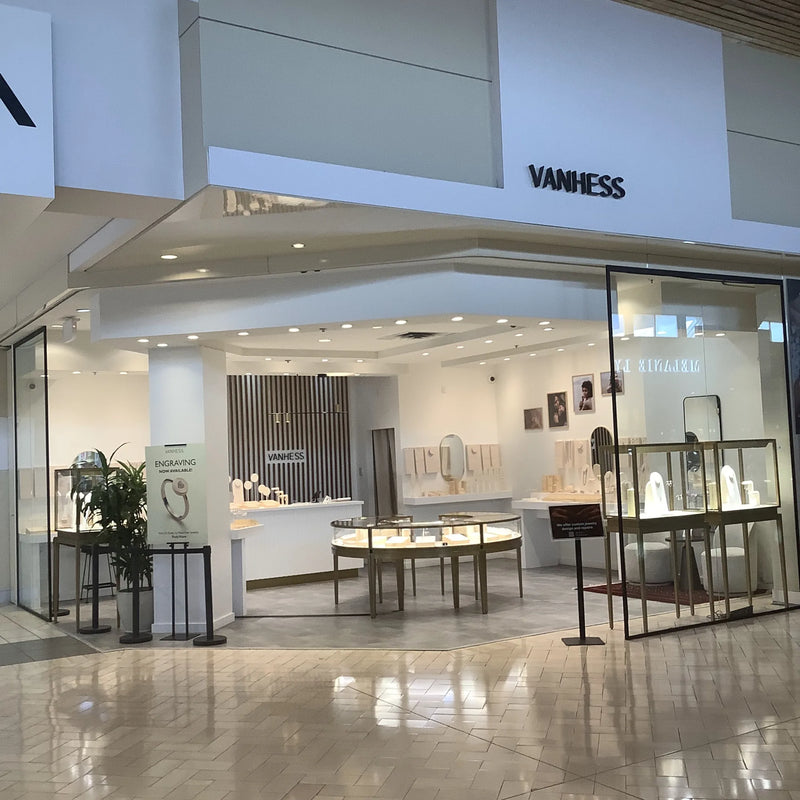
The Vanhess store is at 2929 Barnet Highway, Unit 2424, in Coquitlam Centre. Call us at +1 (604) 653-6449 before you come in, and we will tell you which Olha pieces are in the store that day. You can also see every piece online in the Olha New Collection.
